

The best journal prompts for when you don’t know what to write are the ones that fit the day you just had. A tired day needs one easy line, a big day needs room to tell the story, and a day full of feelings needs a question to sort them out. Pick how today felt, what happened and how much energy you have left, then end with one good thing so the page isn’t all venting.
Why do I go blank when I sit down to journal?
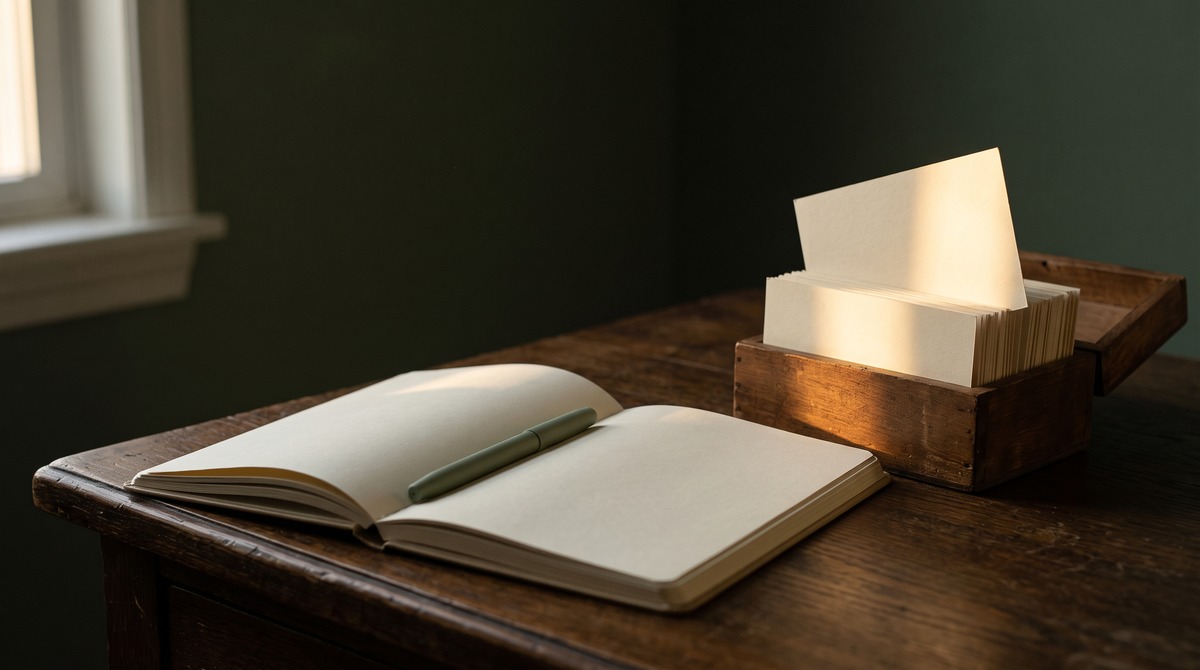
I usually go blank because nothing on the page tells me where to start, and a prompt only helps when it fits the day I actually had. I’m not the most consistent journaler. Some days I sit down and practically write a book, and other days I stare at the page and wish somebody would just hand me a question.
Right now I write in a blank notebook with no prompts, which is great on the book days and not so great on the blank ones. Before this one I used a guided journal for a while, the Brain Shift Journal and a few others, and those had the opposite problem. Sometimes I wanted to write about something the prompt didn’t ask about, so I’d skip it or ignore it.
The bigger issue was the days when the prompt didn’t fit. Answering it felt forced, or it made me want to put the journal down because I was tired and didn’t feel like thinking about that particular thing. On other days the same kind of prompt got me thinking in a way I wouldn’t have on my own. So for me, whether a prompt helps depends on the day.
How do I pick a journal prompt that fits my day?
Ask yourself three quick questions before you write anything:
- How did today feel? Good, rough, regular, wired, or tired.
- What happened? Something big, feelings you need to sort out, something happy you want to remember, or not much at all.
- How much do you have in you? One line, about a page, or “I could write a book.”
Those three answers point to a prompt that fits. A rough day with feelings to sort out and almost no energy left needs something different from a good day where something exciting happened and you can’t stop thinking about it.
I built a little tool for this so you don’t have to sort it out yourself. Tap your three answers and it gives you one prompt for today, a couple of follow-ups if you stall, and one good thing to write before you close the notebook. If the prompt doesn’t fit, hit “Give me another” and it’ll swap it out.
What makes a journal prompt useful?
A useful prompt gets you writing about something real instead of rambling just to fill a page and check a box. When I look at my long journaling days, they usually come from one of two places. Either something eventful happened, or I had feelings I needed to process, and writing them out helped me see why I felt the way I did. The rest of the time I’m recording a happy thing I don’t want to forget.
I also have a few prompts I jotted down a long time ago, and I can’t remember where I saw them. The questions on that list are what made me want a prompt tool in the first place. One asks about something I handled today that I once thought I couldn’t, one checks whether my body is still holding onto anything I can let go of, and one asks for something I’m proud of, even if it’s tiny. None of the prompts in the tool are copied from that list, but they come from the same kinds of questions.
| What kind of day it was | What a useful prompt does | A prompt from the tool |
|---|---|---|
| Something big happened | Gets the story down before it fades | “What happened today, told the way you’d tell your best friend?” |
| Feelings to sort out | Helps you find where a feeling started | “What’s the feeling, and when did it first show up today?” |
| Something happy | Saves the details so you can come back to them | “What made you smile today? Write it down with every little detail.” |
| Not much happened | Finds the one small thing worth noticing | “What’s one small thing you noticed today that you’d usually walk past?” |
| Running on empty | Asks for one line and nothing more | “What’s one thing you’re proud of today, even if it’s tiny?” |
How do I keep my journal from turning into a complaint list?
End every entry with one good thing. I don’t want my journal to turn into a place where I only vent about my day, so I want a reminder to write happy things and things I’m grateful for too. That’s why every prompt from the tool comes with a “before you close the notebook” line, like one tiny win from today or one person you’re glad is in your life.
Venting is fine. Some days you need to get it out. One good line at the end means the last thing you wrote isn’t the worst part of your day. I wrote more about writing down good things without it turning into autopilot in my post on building a daily gratitude practice.
Do I have to journal every day?
No. You can skip days and pick it back up whenever you have something to write and the energy to write it.
I have a bad habit with this one. If I skip a day, my brain goes, “Well, that’s done,” like the whole thing is ruined. It’s the same thing that happens to my routine when the season changes, where one slipped habit takes the rest down with it. It doesn’t have to work that way. I can pick it back up the next day I have something to write, and so can you. The tool doesn’t track anything for the same reason, so there’s no streak to break.
If a night of writing would help you wind down, my evening wind-down routine has a brain-dump journal as one of its steps. And if journaling stirs up a long list of things you want to do, the Seeds to Plant tool helps sort that list into what to start first.

Today’s action
Write one page tonight, or one line
- Open your notebook, even if it’s been weeks.
- Answer the three questions: how today felt, what happened and how much energy you have.
- Grab a prompt from the tool above, and tap “Give me another” if it doesn’t fit.
- Write until you’re done, whether that’s one line or three pages.
- Before you close the notebook, write one good thing from today.
Frequently asked questions
What should I write in my journal when I don’t know what to write?
Write about the day you just had, using a prompt that fits it. Ask yourself how today felt, what happened and how much energy you have, then pick a question that matches. A tired day can be one line, and a big day can be the whole story.
What if a journal prompt doesn’t fit my day?
Skip it and pick a different one. A prompt that doesn’t fit feels like forcing an answer, and that’s when a journal ends up back on the shelf. The tool in this post has a “Give me another” button for exactly this.
Do I need a guided journal, or is a blank notebook better?
Either works, and I’ve used both. A guided journal helps on the days you go blank, and a blank notebook gives you room on the days you have a lot to say. Pulling a prompt only when you need one gives you a bit of both.
How do I stop my journal from being all venting?
End each entry with one good thing, like a tiny win, something you’re grateful for or a person you’re glad you have. You can still vent first. The good line just makes sure the page doesn’t stop there.
Is it bad to skip days in my journal?
No. Skipping a day doesn’t erase the days you wrote, and you can pick it back up whenever you have something to say and the energy to say it.
Where I am with this
I’m still writing in a blank notebook, and I only reach for a prompt on the days I go blank. Some nights I practically write a book, and some weeks I don’t open it at all. Journal prompts for when you don’t know what to write work best when they fit your day, so pick how today felt, what happened and how much you have in you, then end on one good thing. Tonight can be one line.
A book I made
The Lightest One
An undated ADHD daily book that never asks you to prioritize. Dump everything in your head, mark each thing light, medium or heavy, and do the lightest one.
Get the paperback →I run an affiliate program on the tools I build. Approved affiliates earn 20% on what their referrals pay, for up to a year. US only for now. See the program →