
My routine falls apart every time the season changes because the routine was built for the light, the temperature, and the schedule I had at the time, and the season takes all three away at once. It isn’t a discipline problem. Once the sun starts setting early I’m ready for bed at 4:30 in the afternoon, and no planner fixes that. What does work is finding the one habit still standing after the switch and letting everything else regrow around it.
Why does a routine fall apart when the season changes?
Because a routine is a set of cues, and seasons change the cues.
Mine runs on daylight more than I’d like to admit. In summer the light goes late, and with it comes a pressure to get outside, which is good for me and terrible for my task list. Then the cold months arrive, the sun drops early, and my body reads the dark as bedtime whether it’s 4:30 or 9. Dinner gets heavier. The bed gets more appealing. My energy dips, and the workday gets shorter without me deciding it should.
None of that is a failure. It’s what the routine was built on changing underneath it. But the effect is the same every time: once one piece slips, the whole thing topples, and I’m routine-less until a new one forms, every habit at once rather than one at a time.
Is a shorter workday actually the problem?
No, and I had to think about this one, because my first instinct is to treat every lost hour as a loss.
I work too much. I know this about myself, and the dark season is the only thing that reliably makes me stop earlier. A workday that ends when the light does is a shorter workday, and for me that isn’t automatically bad. Some of what the season takes away is stuff I needed taken away.
So the goal here isn’t to keep the summer routine running through November on willpower. It’s to stop losing everything when the season switches, and to be choosy about what I try to keep.
Why doesn’t a new planner fix it?
Every quarter I get the new-planner moment. New season, new system, this time I’ll have it all together before the holiday rush hits. I make the promise every year. The busy fourth quarter arrives and I don’t have it all together, and now there’s a half-used planner in the pile too.
The planner fails because it’s a reset, and a reset is the wrong tool for a season change. I already have a post on the reset that works, and it’s about cutting projects and picking a lane. That’s a once-or-twice-a-year decision. A season change doesn’t need a decision from you. The useful question is which habit is still standing.
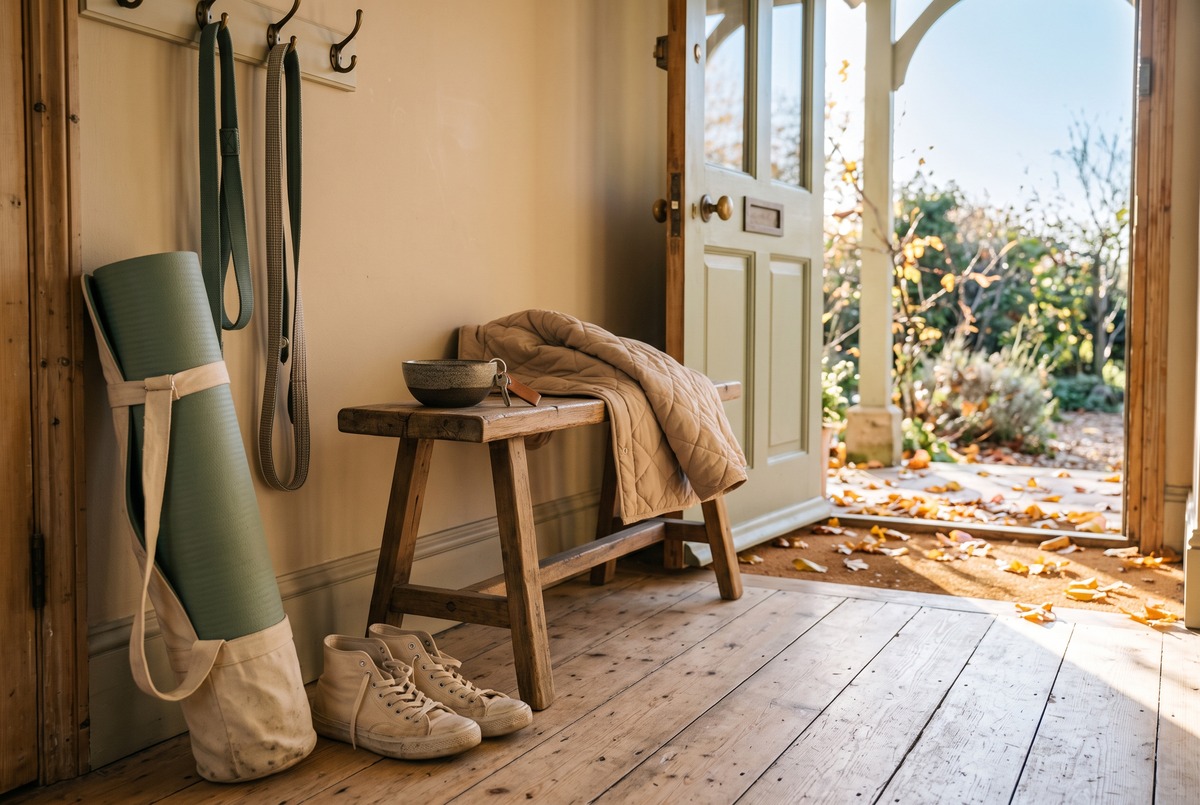
What survives the switch, and why?
Pilates. Through every season change this year, through the heat and the storms and the early dark, Pilates has held when nothing else did.
I’ve thought about why, because it isn’t willpower. I’m no more disciplined about Pilates than I am about any of the home habits that collapse every time the season turns. Three things are different about it:
- It’s outside my house. It forces me to leave, which means it can’t be swallowed by the couch and the dark the way a home habit can.
- It has people in it. Too much time alone and I get weird and extra awkward. Pilates puts me in a room with other humans on a schedule I didn’t have to invent.
- It’s doing something I can feel. I’m stronger all around, and it’s necessary for my mental health in a way I stopped arguing with a while ago. It has a reason bigger than the routine it lives in.
The home habits fail all three tests. They live where the couch is, they involve nobody, and their payoff is far away and quiet. When the season leans on them, they go, and for me they go together.
Pilates is also the one I kept count of. I built a tracker for it on my other site, and watching the number climb is part of why it held.
I don’t think the answer is to move every habit out of the house. The answer is to know which one of yours already passes, protect that one on purpose when the season turns, and let it be the stake the rest of the routine ties itself back to.
How do you rebuild around the one that survived?
Slowly, and not all at once, which is the opposite of what the new-planner moment wants.
When my routine topples in the fall, the thing I do now is stop trying to stand it all back up on the same morning. I keep Pilates. I let the shorter workday be shorter. Then I add one home habit back, and I don’t add the next one until that one has held for a couple of weeks in the new light. My energy tracking post is where I learned to look at what the season is actually doing to me before deciding what to put back.
Some of the summer routine doesn’t come back at all. Outside time shrinks with the daylight, and I’ve stopped arguing with that one.
What I’m looking forward to this time
For the record, fall is my favorite season, and this summer was too hot, too buggy, too stormy and way too tornado-y for my taste. I’m ready for the crisp cool part. I’m just not going to pretend the early dark won’t get me, because it does every year, and the pretending is what made the toppling feel like failure.

Today’s action
Before the season fully turns, find your survivor.
- Write down the habits that made it through your last season change without you re-deciding them. If it’s one, that’s normal.
- Ask why it held: outside the house, other people involved, a payoff you can feel? Note which of those it passes.
- Protect that one on purpose for the next month. Everything else gets to fall down without a verdict.
- Add one habit back only after the survivor has held for two weeks in the new light.
Frequently asked questions
Why does my routine fall apart when the seasons change?
Because a routine runs on cues, and a season change swaps the light, the temperature, and often the schedule all at once. Habits built on summer daylight lose their trigger when the sun sets early, and one lost habit tends to take the rest with it. The cues moved. You didn’t get lazy in September.
Why do I have no energy when it gets dark early?
Your body reads early darkness as evening, so it starts winding down whether or not you’ve finished your day. For me that means feeling ready for bed at 4:30 in the afternoon once the sun starts going down early. Fighting it has never worked. Letting the workday be shorter, which I needed anyway, has.
Should I do a fall reset?
No, if by reset you mean a new planner and a new system. A reset is for deciding what to cut and which lane to pick, and I keep a separate reset post for that. A season change needs something smaller: notice which habit survived, protect it, and rebuild one piece at a time.
How do I keep habits going in winter?
Keep the ones that live outside your house or involve other people, because those are the ones the couch and the dark can’t swallow. Let the home habits fall and add them back one at a time, two weeks apart, once you can see what the shorter days are doing to your energy. Rest counts as part of the routine, especially in the dark months.
Is it bad that I work less in the fall and winter?
No. A shorter workday is only a problem if the work that matters isn’t getting done. If you work too much the rest of the year, the dark season stopping you earlier is doing you a favor you wouldn’t do yourself. Keep the seed that matters and let the extra hours go.
What if nothing survived my last season change?
Then borrow the pattern instead of the habit. Pick one small thing that gets you out of the house and around people on a schedule you didn’t invent, a class, a standing walk with someone, a weekly volunteer shift. Build that first, and let it be the stake the rest of your routine ties back to.
A tool I built
Energy Battery
Log your energy through the day and watch your battery fill, so you can see what actually charges you and what drains you.
Find your spark →I run an affiliate program on the tools I build. Approved affiliates earn 20% on what their referrals pay, for up to a year. US only for now. See the program →
Related reading
- A Mid-Year Reset That Doesn’t Require Blowing Up Your Life
- How to Be Consistent When You’re Tired (Shrink the Seed)
- How to Get Back on Track After You Fall Off
- How to Track Your Energy and Find Out What Actually Charges You
So when the light goes and your routine goes with it, skip the planner aisle. Find the habit that’s still standing, thank it, keep it, and put the rest back one piece at a time as the new season shows you what it wants.