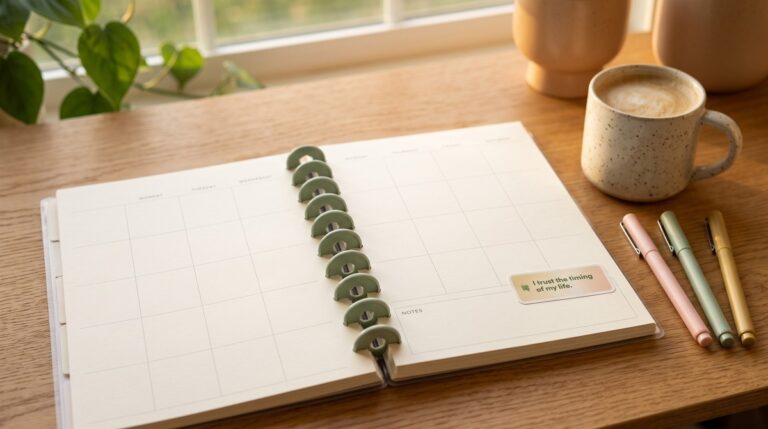


A good evening wind-down routine does two things: it closes today and plants one small seed for tomorrow. Instead of scrolling until you crash, you spend ten quiet minutes emptying your head onto paper, noticing one good thing, and setting up a single easy win for morning-you. That’s the whole routine. It ends the workday in your mind so you can rest, and it hands tomorrow a head start.
The workday ends but your brain doesn’t get the memo. You close the laptop and the thinking keeps going, so you reach for your phone to numb it, and an hour later you’re more wired than when you started. The evening dissolves. You go to bed wound up about tomorrow’s list, sleep poorly, and wake up already feeling behind.
Here’s the small shift that changed my nights: I started treating the evening as the place to plant tomorrow’s seed. Ten quiet minutes tonight buys morning-you an easy start, and an easy start is how momentum survives the night.
Why can’t I switch off at night?
You can’t switch off because nothing told your brain the workday is over. When you build something of your own, there’s no commute, no coworker waving goodbye, no clear line between working and living. Your mind keeps the tabs open because you never closed them. When you work from home you live at work.
Willpower won’t fix this, and neither will a stricter bedtime. What works is a cue: a small, repeatable signal that says the day is done. The wind-down routine below is that cue. Do it enough times and your body starts to relax on schedule, the way it once did when the office lights went off.
What does a simple evening wind-down routine look like?
A simple evening wind-down routine has three parts, and none of them is a biohack. You close today, plant tomorrow’s seed, and calm your body. Ten minutes total, gentle enough to keep on a tired night.
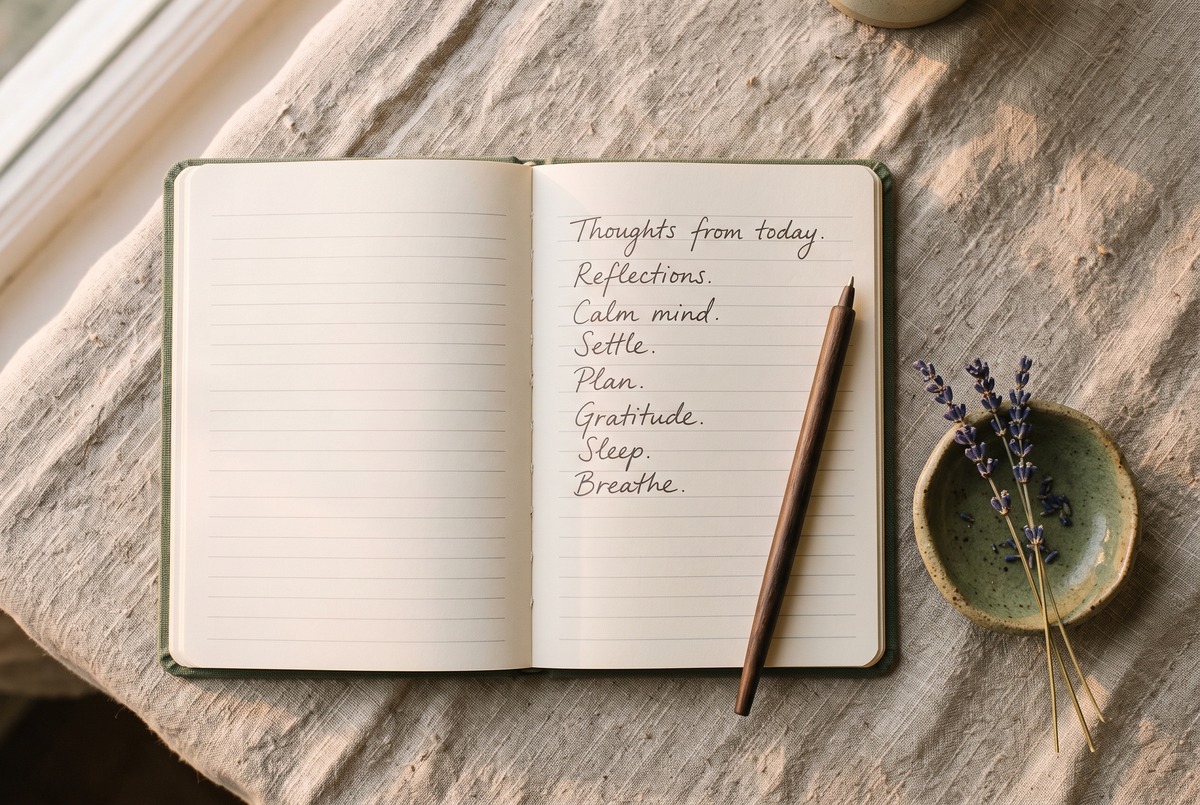
- Close today. Empty your head onto paper. Every open thought, worry, and half-finished task goes into a notebook so your brain can stop holding them. This is a brain-dump, not a diary, so keep it messy.
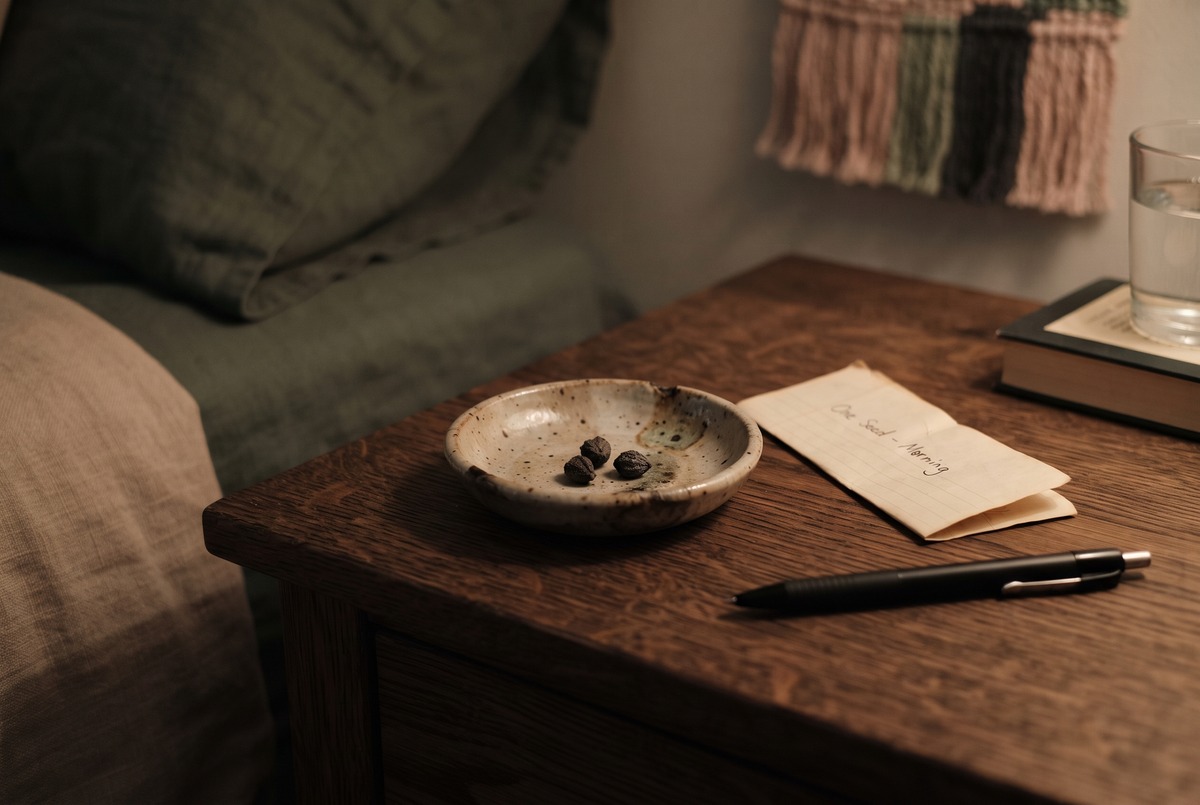
- Plant tomorrow’s seed. Write the one thing that would make tomorrow a win. Not the whole list. One seed. Morning-you wakes up to a clear first step instead of a blank, anxious start.
- Calm your body. Give yourself a physical signal the day is closed: phone in another room, dim the lights, a cup of something warm. The cue matters more than the ritual, so pick one you will keep.
If you already have a morning routine for builders, think of this as its bookend. The morning sets the tone, the evening protects it. Together they hold your day like two hands.
How do I plan tomorrow the night before without the anxiety?
You plan tomorrow by choosing one seed, not by writing a twenty-item list. The anxiety comes from the long list, because a long list at night is just a pile of everything you didn’t finish. One clear next step is calming. A wall of tasks isn’t.
So ask a single question before bed: what is the one thing that would make tomorrow feel like a win? Write only that. You can add more in the morning when you have the energy to sort it. Tonight, one seed is enough. This is the same small-steps logic behind staying consistent, moved to the end of the day. If you want the machine version of this, I built an n8n workflow that turns my Asana tasks into a daily plan over on Jen8n. Same idea, less handwriting, though I still write the seed myself.
How do I stop doomscrolling before bed?
You stop doomscrolling by swapping it, not by quitting it cold. The scroll fills a real need to decompress, so if you just take it away with nothing in its place, you will drift back. Give the wind-down a job the phone was doing badly.
| The numbing version | The wind-down swap |
|---|---|
| Scroll in bed until you crash | Ten minutes journaling, phone charging in another room |
| Replay the day’s stress on a loop | Brain-dump every open thought onto paper |
| Lie awake planning tomorrow | Write one seed for tomorrow, then close the notebook |
| Push for “just one more hour” of work | A hard-stop cue: warm drink, dim lights, workday closed |
The swap works because it meets the same need. You still get to put the day down. You just do it in a way that leaves you calmer instead of more wired.
My real evening seeds
I’ll keep this small and real, because my evenings aren’t a glowing wellness routine. Two things actually help me. The first is a brain-dump journal. I write down everything rattling around, gratitude and worries both, until my head feels quieter. Noticing one good thing from the day matters more than I expected, and it’s the same muscle behind a daily gratitude practice. It ends the day on what grew instead of what didn’t. A plain notebook is all this needs. If a blank page feels like too much, I reviewed a guided productivity planner over on Jen Tried It with the structure already built in.
The second is prepping one thing for tomorrow. Some nights it’s laying something out. Most nights it’s just writing the single seed I want to plant when I wake up. It’s a tiny move, and it’s the difference between a morning that starts with momentum and one that starts with dread. Your version might look different. Look for the one or two small things that quiet your own night.
It doesn’t work every night. Some nights I’m too fried to write anything, so I go straight to bed and the next morning starts rough. That’s the trade. This only helps on the nights you actually do it, which is why I keep it to ten minutes instead of building something I will quit by Thursday. Seasons knock it loose too. When the dark comes early, I lean on the one habit still standing, which is what I wrote about in why my routine falls apart every time the season changes.
Today’s action
Before bed tonight, open a notebook and do two lines. Line one: brain-dump whatever is loudest in your head right now. Line two: write the single seed that would make tomorrow a win. Then close the notebook and put the phone in another room. That’s the whole practice. Plant one seed for morning-you.
If checking off the same small thing each night is what makes it stick for you, I built Dopamine Dealer Habits for exactly this. It’s a free habit tracker with enough of a reward loop to make the streak feel good, and an evening wind-down is a solid first habit to put in it.
Frequently asked questions
What is a good evening wind-down routine?
A good evening wind-down routine closes the day and sets up the next one in about ten minutes. Brain-dump your open thoughts onto paper, note one good thing, write the single most important task for tomorrow, then give yourself a physical cue that the workday is over. Keep it small enough to repeat when you’re tired.
How do I stop thinking about work at night?
Give your brain a place to put the thoughts and a signal that the day is closed. Write every open loop into a notebook so your mind stops rehearsing them, then use a consistent cue like dimming the lights or moving your phone to another room. The thoughts return when there’s nowhere to set them down.
How long before bed should I start winding down?
Start about thirty to sixty minutes before you want to be asleep. That’s enough time for a short brain-dump, a one-line plan for tomorrow, and a screen-free buffer so your body can shift out of work mode. Even ten focused minutes beats none.
Should I plan tomorrow the night before?
Yes, but keep it to one seed, not a full list. Writing the single most important task for tomorrow gives morning-you a clear starting point and quiets the anxiety of an open day. Save the detailed planning for the morning when you have more energy to sort it.
How do I stop scrolling my phone before bed?
Swap the scroll for something that meets the same need to decompress, like journaling or a warm drink, and move the phone out of reach so the habit takes effort. Quitting cold rarely sticks because the scroll is filling a real need. Replace it instead of just removing it.
A tool I built
Energy Battery
Log your energy through the day and watch your battery fill, so you can see what actually charges you and what drains you.
Find your spark →I run an affiliate program on the tools I build. Approved affiliates earn 20% on what their referrals pay, for up to a year. US only for now. See the program →
Related reading
- Morning Seeds: A Simple Routine for Builders
- How to Be Consistent When You’re Tired (Shrink the Seed)
- How to Build a Daily Gratitude Practice That Actually Sticks
Tonight’s seed is tomorrow’s head start
An evening wind-down routine closes the day gently and plants one small seed so tomorrow starts with momentum instead of dread. Empty your head, notice one good thing, write the single seed, and put the day down. Ten quiet minutes tonight is a gift to the person you will be in the morning. Plant it.