
Amazon influencers get products in a few ways, and mine come from four main places. Some are things we bought for our house anyway, some I borrow from my parents’ houses, some come through Creator Connections campaigns, and some come from brands that email or message me. My tracker holds about 1,560 products, and 499 of them are things we bought for ourselves. Every one still needed a video before it earned anything.

I make short review videos for Amazon, and the question I get right after “what do you do with all of it” is where it all comes from. I already wrote about what I do with Amazon influencer products after I film them, so this post covers the other end of the pile. I’m nervous about saying too much here, because Amazon has a lot of rules, so I’m sticking to my own numbers and what Amazon says on its own pages.
Heads up: some links in this post are affiliate links, so I earn a commission if you sign up, at no extra cost to you. I only point to tools I actually use.
Where do Amazon influencers get products to review?
I log every product I film in Porch Pile, the tracker I built, including where it came from, and my roughly 1,560 products break down like this:
- Bought for our house: 499. Things we needed or wanted anyway.
- Creator Connections: 436. Campaigns brands run through Amazon’s program.
- Brands that emailed me: 274. Plus a handful from Instagram messages and a Facebook group.
- Borrowed: 123. Mostly from my parents’ houses.
- Levanta: 108.
- Logie: 65.
- Everything else: about 55. Other platforms, gifts, and a few things we already had in the house.
The mix has shifted toward Creator Connections. I started logging the date each product arrives in late January 2026, and since then, 283 of the 427 products I’ve logged came through Creator Connections.
Do Amazon influencers buy the products they review?
I do, but I don’t buy things to review them. I buy them for us, and since they’re already in the house, I might as well film them. Everything goes into my database, which keeps it organized and reminds me which ones I still want to review. The whole setup, and the six statuses every item moves through, is in how I keep track of every product I receive.
It does change how I shop, though. When I’m buying something we need and there are a few choices, I’ll pick the one that fits what I look for in a review product more often than not. We were buying a version of it either way.
How do you get products to review when you’re just starting out?
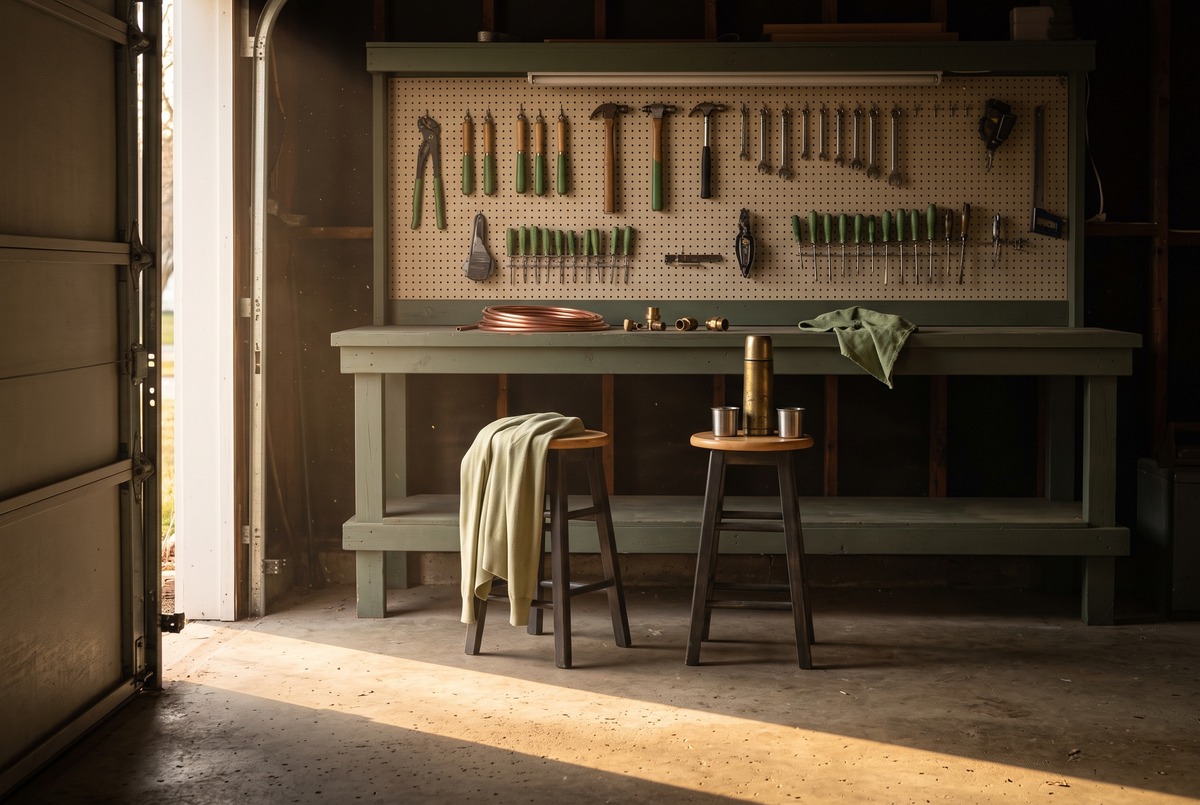
Start with what you already own, then ask your family. I covered the “invade your family’s house” idea in the post about what happens to my products, so this is more about who I film with.
Most of my borrowed products come from my mom’s house and dad’s house. My sister is living at my dad’s right now, so if she buys something cool, we film it. My dad likes to get involved too, especially when it’s a tool or something for the yard. My favorite was a gas leak detector. He works in HVAC, so he was thorough and helpful in the review, and he loves talking about his trade. I love reviewing things with him, because it’s time with my dad, I learn something, and he seems to enjoy it.
Two rules keep this honest. Only review what somebody is actually using, and don’t make things up about it. And don’t ask family to buy things through your links, since Amazon’s policies don’t allow encouraging friends or relatives to do that.
How do brands find Amazon influencers?
Mine find me through my socials. My email is listed on my social accounts, and those accounts are linked to my Amazon influencer profile. Once I had videos up and people started noticing them, brands started reaching out. Most of it comes by email, with some Instagram messages and other places mixed in.
These days, a lot more of my products come through Creator Connections, which is Amazon’s own program where brands offer creators a bonus commission for sales from their content.
Why I don’t say yes to every brand
Not every offer gets a yes. I say no when a brand wants me to follow a script, when they want to change what I say about the product, or when the product isn’t a fit for me. I also turn down brands that ask me to buy the product on Amazon and say they’ll pay me back. Amazon’s seller code of conduct doesn’t allow brands to pay for orders or refund them outside of Amazon, so those are an easy no.
I also go through spurts where I say yes to everything, and I always pay for it. There’s a me who says yes to all of it and a me who gets very overwhelmed, and they rarely show up on the same day. I still catch myself doing it.
What helped was a line I heard someone say in an interview, “I’m not trying to just be busy.” I don’t remember who said it, but I remember thinking, oh, I guess I was trying to be busy. It gave me a reframe I needed. If you’re a starter of things too, why I start everything and finish nothing is the same pattern outside of Amazon.
The money side changed too. In April 2026, Amazon changed onsite commissions, the ones from videos on Amazon, so they only apply to purchases of the same product variant as the one in the video. For me, a lot of products only make sense now when they have a Creator Connections campaign, not just the regular commission. If you really need or want the item, that’s a different story.
How do you decide which products are worth filming?
I use a browser tool called Oink, and I wouldn’t want to do this without it anymore. It has a free version, and Pro runs $29.99 a month or $249.99 a year. My code JENNIFER takes 10% off if you decide to pay for it. It has a badge called Fizz Approved, and a product gets it when it checks four boxes at once:
- It’s selling right now.
- It has video spots near the top of the product page.
- It has a Creator Connections campaign.
- That campaign has at least 60 days left.
Most of the time, I go by what Oink shows me. It also points out which products have a Creator Connections campaign, which is the part I’d waste the most time on by hand. I could take more time to compare products than I do, and that’s something I’m working on.
What are Levanta and Logie?
Levanta is a platform where brands and creators work together, and it’s free for creators. I’m still pretty confused by parts of it, but it’s a good way to talk to brands and request samples, and I use their links when I can. Levanta links are Amazon tracking links that pay a commission set by the brand when someone buys after clicking from outside Amazon, according to Levanta’s help pages. I recently got a bonus from Levanta that I had no clue was coming, so I’m glad I’ve been using their links.
Logie is another platform brands use to send products to creators. Brands pay for it, and creators use it for free, so I’ve never paid for it. They have a lot more going on as of recently, too, so I will need a refresher on all that.
What I’d tell a new Amazon influencer
Always read the rules, and keep up with them, because they change. I also think it’s worth finding ways to earn from links outside of Amazon, not just from videos on Amazon. Onsite commission is what Amazon pays when a shopper who’s already on Amazon sees your video there and buys that exact product. Offsite is the regular commission you earn when someone clicks your link from somewhere else, like a blog or Instagram, and then buys. I put the longer version of this in the tips I wish I’d started with.

This week’s practice: find your first five products
- Walk through your own house and write down five things you use and would recommend.
- Ask one family member what they bought recently and love, and whether you can film it with them.
- Start a simple list with where each product came from, so you can see your own mix later.
Frequently asked questions
How do Amazon influencers get products?
They get them from a mix of places, and mine come from things we bought anyway, my parents’ house, Creator Connections, brands that reach out, Levanta, and Logie. Out of about 1,560 products in my tracker, 499 were things we bought for ourselves.
Do Amazon influencers have to buy the products they review?
No, but a lot of mine are things I bought for our house, not for the review. I buy what we need, then film it since it’s already here. New creators can start with what they own and what family members are using.
How do brands contact Amazon influencers?
Mine reach me through the email on my social accounts, which link to my Amazon influencer profile. Some reach out on Instagram, and a lot more come through Creator Connections now. For me, brands started reaching out once I had videos up and people noticed them.
Should you accept every brand that reaches out?
No. I turn down brands that want a script, want to change my opinion, or aren’t a fit, and I’ve learned that saying yes to everything leaves me overwhelmed later. I also skip brands that ask me to buy the product and pay me back, because Amazon’s seller rules don’t allow that.
What is Amazon Creator Connections?
Creator Connections is Amazon’s program where brands offer creators a bonus commission for sales from their content. Creators need to be in the Amazon Influencer Program and at the Bronze tier or higher in Creator Stars, according to Amazon’s help page for the program.
A tool I built
Porch Pile
Track your whole Amazon Influencer operation, every product, video, and brand deal, so one glance tells you what to film next.
Start your pile →I run an affiliate program on the tools I build. Approved affiliates earn 20% on what their referrals pay, for up to a year. US only for now. See the program →
Related reading
- What I Do With Amazon Influencer Products After I Film Them
- Affiliate Programs That Accept Small Creators: I’m in All 10
- You Don’t Need a Big Audience to Be an Affiliate
- Why I Start Everything and Finish Nothing
My Amazon influencer products come from what we already buy, my parents’ house, Creator Connections, brands, Levanta and Logie, and I say no to the offers that don’t fit. If you’re just starting, film five things from your own house this week, and the brands tend to come after the videos do.