
Put your vision board where your eyes already go without being asked. Mine worked for years taped across my desk at an office job, and it stopped working the day I made a prettier one and hung it on a wall I never face. The pictures weren’t the variable. The placement was. If you spend your day looking at a screen, that’s where the board belongs.
Why did your vision board stop working?
I want to be careful here, because I don’t think you did anything wrong.
Back when I worked in an office, I had pictures stuck all over my desk. Not a board, nothing designed, just things I’d printed or torn out and propped against the monitor and taped along the edges. They were in front of me for eight hours a day whether I felt like looking at them or not. I wasn’t doing a practice. I was just sitting there, and they were just there.
Then I started working from home, and I did the thing you’re supposed to do. I made an actual vision board. Pictures I chose on purpose, arranged the way I wanted, on a proper board. It’s genuinely nicer than the taped-up mess ever was.
It’s also on a wall I don’t face. I’ve been much less consistent with it, and for a long time I thought the inconsistency was about me.
It wasn’t. Same person, same practice, two different spots, two different results. The board behind me is a decoration. The pictures on my desk were in my sightline every time I looked up.
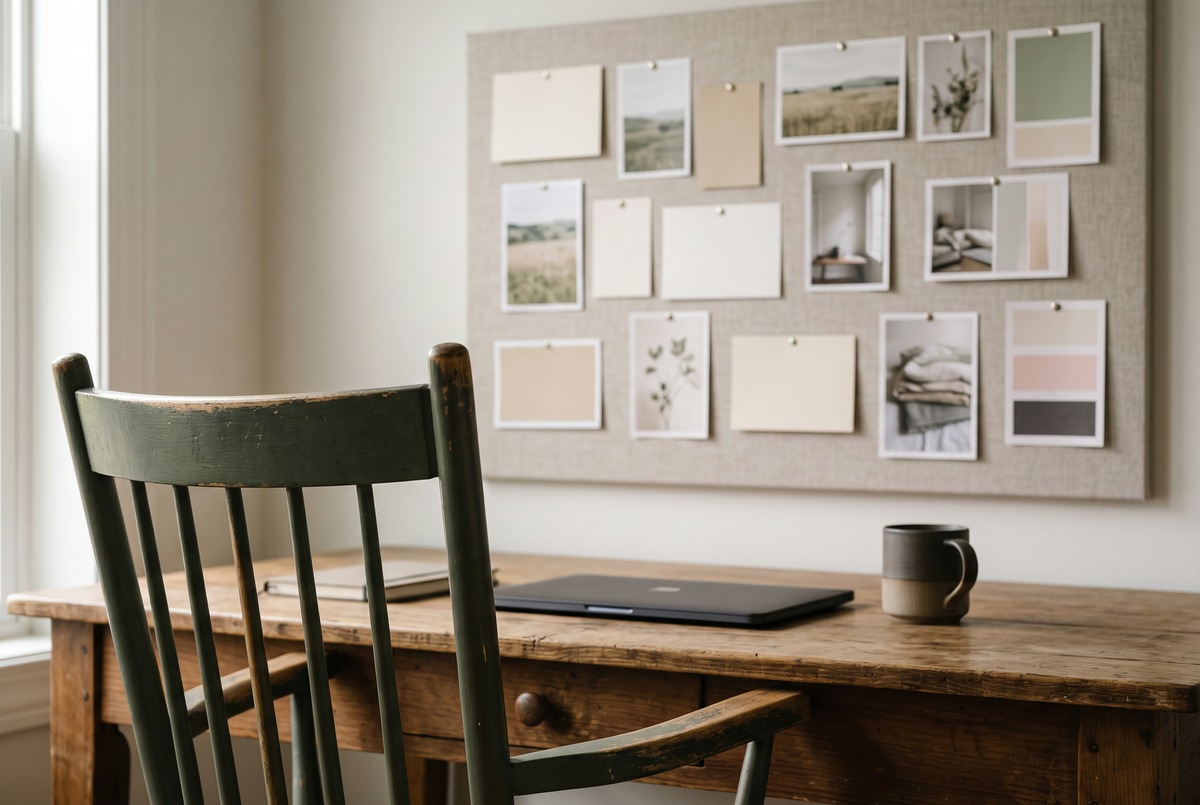
Where should a vision board go?
The rule I’d give myself now is short. Put it where your eyes already land by default, not where a board is supposed to live.
That’s a different question than “where is there wall space,” and it’s the question I skipped.
| Where it lives | What actually happens |
|---|---|
| A wall behind your desk | You see it on your way out of the room, which is when you’re already done thinking about it |
| A Pinterest board or a folder on your computer | You see it when you go looking, and going looking means you already remembered |
| The wall you pass every morning | Works, if your mornings are slow enough to look up |
| Propped on your desk, in your sightline | This is the one that worked for me for years |
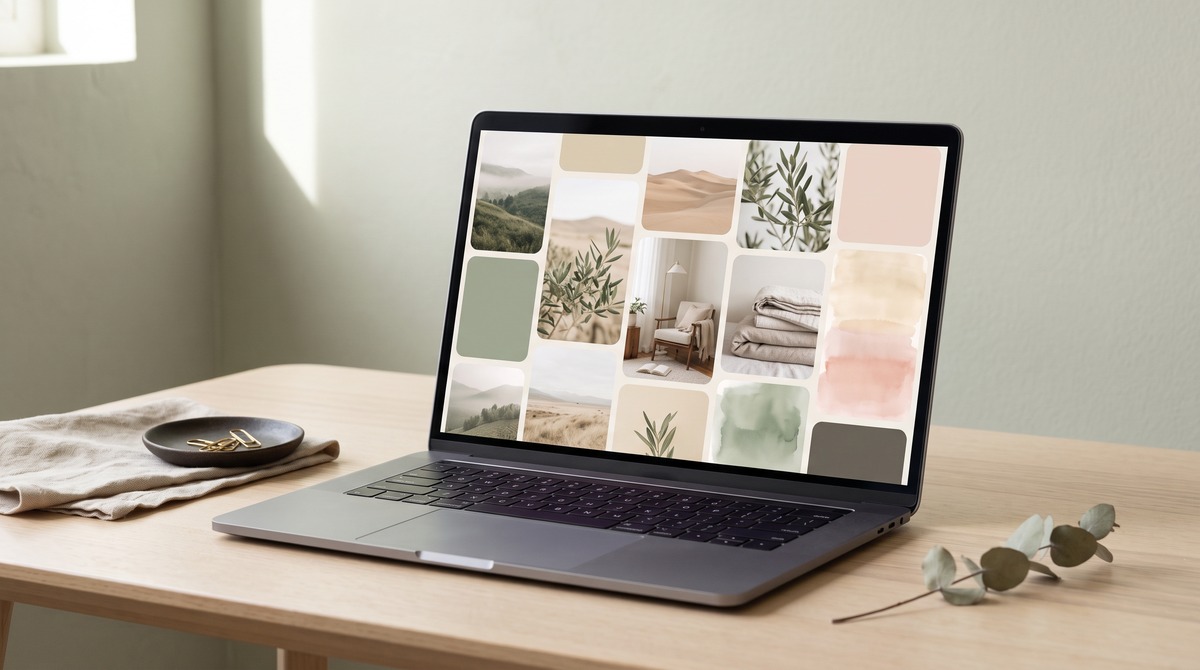
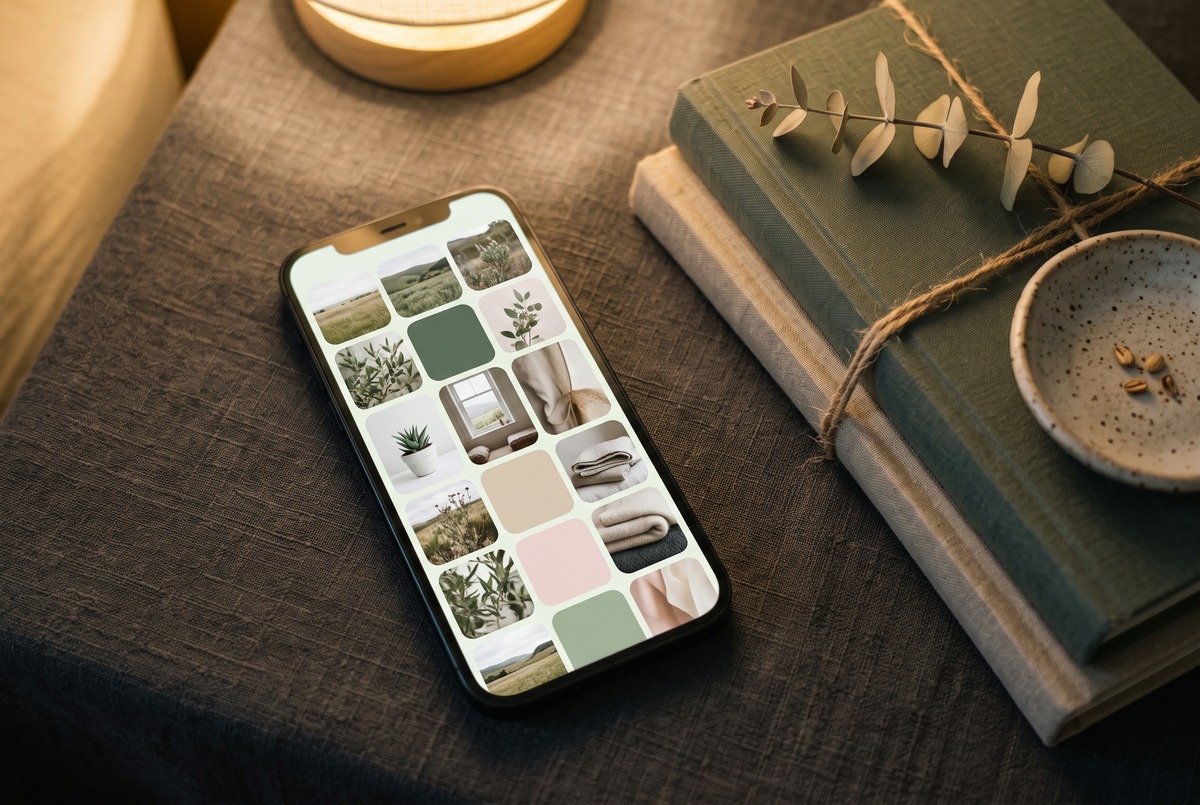
| Your desktop and your phone lock screen | Where my eyes go now, dozens of times a day, without deciding to |
If you work on a screen, the real answer to “where do my eyes already go” is the screen. Not the wall behind the screen. The screen.
So that’s where I put mine, and I built a small free tool to make one, because I wanted the pictures and the seed on the same image and I didn’t want to fight with a design app to get it. It’s further down this post.
What my grandpa’s book got right
My grandpa handed me manifestation before I had a word for it, through a little book called If You Can Count to Four by J. Jones. The idea I kept from it is that you write the thing down like it’s already true. Not as a wish. As a fact you haven’t caught up to yet.
Writing it down is still the part I believe in most. What I’d add, after this year, is that writing it down and then filing it away isn’t finishing the job. The paper has to stay somewhere your eyes go, or you’ve written a nice note to nobody.
I’ve got a deck of affirmation cards at my desk for the same reason, and the ones I actually use are the ones sitting out where I’ll see them.
A vision board is that same idea in pictures. Same rule applies.
The universe likes you to be precise
Something happened while I was making mine, and it changed what went on it.
I started with the big ones. A photo of land, because I want to start an animal sanctuary. A disaster-proof house, because this has been the summer of tornadoes and I’ve got real storm anxiety about it. Financial freedom, which is the wording I chose on purpose. Getting rich is a different wish and I’m not making it. I want the freedom part.
Then I looked at what I had and thought, these are enormous. And I remembered the universe likes you to be precise.
So I added the specific ones:
- A pretty kitchen, because ours needs a remodel badly. You could film Stranger Things in our kitchen.
- A big cozy chair, because I want a reading nook.
- A Pilates reformer, because I go to a studio now and I’d love to have my own in the house one day.
The disaster-proof house counts as specific too, which I like. It started as a feeling and turned into a thing with a shape.
Big wishes give you a direction. Specific ones give you something to act on this week. You want both up there.
Here’s something I noticed only after I finished. I run three blogs and build apps most of the day, and not one thing on my board is work. Land, a safe house, freedom, a kitchen, a chair, a reformer. Every single one is a life. I didn’t plan that and I’m not going to change it.
The part that has to move
The pictures can stay the same all year. That’s fine. A board is a destination and destinations don’t change weekly.
The line underneath is the part that moves. One small action, changed once a week, sitting under the pictures where you see both at once. The board names where you’re going. The seed is you doing something about it this week.
That’s the same shape as the abundance check I write on the new moon. The number names the destination. The seed is me leaving the house. And it’s the same reason grounded manifestation works better for me than the version where you feel your way there and wait.
Without that line, a vision board is a screensaver. A nice one. Still a screensaver.
Today’s action
Open the photos on your phone and find one picture of something you want. Just one. Set it as your lock screen right now, before you close this tab.
Then write one sentence somewhere you’ll see tomorrow: the smallest thing you can do this week toward it. Not the plan. One action, small enough to finish.
If you want the pictures and the sentence on the same image, use this. It builds one for your desktop or your phone, your pictures never leave your device, and there’s no account. Add up to six, write your line, download it.
Frequently asked questions
Where is the best place to put a vision board?
Wherever your eyes already go without you deciding to look. For a lot of us that used to be a wall and is now a screen. A board on a wall behind you is a decoration, not a practice, so pick your desktop, your lock screen, the wall you face while you work, or the spot you stand every single morning.
Does a digital vision board work as well as a physical one?
For me it works better, and only because I look at it more. There’s nothing special about paper or pixels. The one you see forty times a day beats the beautiful one you see on Sundays.
What should I put on a vision board?
A mix of big and specific. The big ones give you a direction, like financial freedom or a safe home. The specific ones give you something to act on, like a particular chair or a room you want redone. If everything on your board is enormous, you’ll admire it and do nothing.
How often should I change my vision board?
The pictures, rarely. Once a season is plenty, and once a year is fine. The one action written underneath, weekly. That’s the part doing the work.
What if looking at my vision board makes me feel behind?
Then it’s too big and too far away, and that’s a signal, not a failure. Add one small thing you could reach this year. A board should make you want to move, and a board that only holds a life you can’t picture yourself reaching just makes you tired.
Do I have to look at it every day for it to work?
No, and trying to force a daily ritual is what made me quit the last one. Put it where looking is automatic and you’ll stop needing the discipline. That’s the whole point of moving it into your eye line.
The short version
A vision board works when it’s in the path your eyes already take, and it does something when there’s one small action written under the pictures. Move yours somewhere you can’t help seeing it, add one specific thing next to the big ones, and write down the smallest step you can finish this week.
Mine’s on my laptop and my phone now. I’ve looked at it about nine times while writing this, without meaning to. That’s the whole difference.
A tool I built
Emergency Fund Aquarium
Log what you save at your own bank and watch your tank fill with creatures. Your money never moves through the app.
Start your tank →I run an affiliate program on the tools I build. Approved affiliates earn 20% on what their referrals pay, for up to a year. US only for now. See the program →