
You rebuild self-trust the same way you lost it, one decision at a time. Not by waiting until you feel confident, but by keeping small promises to yourself and acting before the doubt talks you out of it. Confidence is the evidence you collect after you show up for yourself a few hundred times. You learn to trust yourself again starting with one kept promise today.
I know the whiplash well. One day I have an idea and I’m ready to go, sure it’s good. The next morning I’m deflated and certain I’m not someone people would hire, listen to, or watch. Everyone says to build in public now. I still can’t bring myself to post the videos. I find an excuse every time, and underneath the excuse is the same small question. Why would anyone want to see me? If your confidence runs hot and cold like that, you’re not broken. You’re out of practice trusting yourself, and practice is a thing you can start again.
Why do I keep second-guessing myself?
Second-guessing is usually imposter syndrome wearing a reasonable outfit. It doesn’t show up as “I am a fraud.” It shows up as “let me just think about this a little more,” and then a little more, until the moment passes and you call that being careful.
The loop feeds itself. Every idea you talk yourself out of becomes quiet proof that you were right not to trust the idea, or yourself. You’re not collecting evidence that you’re capable, because you keep deleting the evidence before it can exist.
What breaks self-trust in the first place?
For me, two things did the damage.
The first was caring too much about what people thought. I let it wreck me when people talked about me behind my back. I took it in and let it shrink me. I’m learning now that I want to be around people who talk about ideas and interesting things, not people who talk about other people. Talking about other people is low-vibe, and it was never a fair courtroom to be judging myself in.
The second was a stretch in my twenties where I planted some genuinely bad seeds. I drank too much and made choices I woke up embarrassed by, and I spent a lot of mornings wanting to hide. For a while I believed I was simply incapable of making a good decision. That belief was the real damage, more than any single night. The good news is a belief is also a seed, which means you get to plant a new one.
Why doesn’t waiting to feel confident work?
Here’s the trap. You think confidence comes first and action comes after. So you wait to feel ready, and ready never arrives, and the waiting itself becomes more evidence that you can’t be trusted to follow through.
It runs in the other direction. Action comes first. The feeling follows. I do better every time I move fast, before I can overthink it. Who cares if the idea turns out to be bad or a little dumb. Done teaches you something. Deleted teaches you nothing. The fastest way to quiet the second-guessing is to give yourself a small win it can’t argue with.
How to rebuild self-trust, one kept promise at a time
This is the practice. None of it requires confidence to start. That’s the whole point.
- Make one promise so small you can’t talk yourself out of it. Not “I will change my life.” Try “I will write one paragraph” or “I will drink water before coffee.” Then keep it today. A kept promise is a brick. You’re laying bricks.
- Act inside the overthink window. When an idea lands, do the smallest real version of it within about ten minutes, before the doubt voice clocks in. Record the messy video. Send the pitch. Hit publish. You can refine later. You can’t refine nothing.
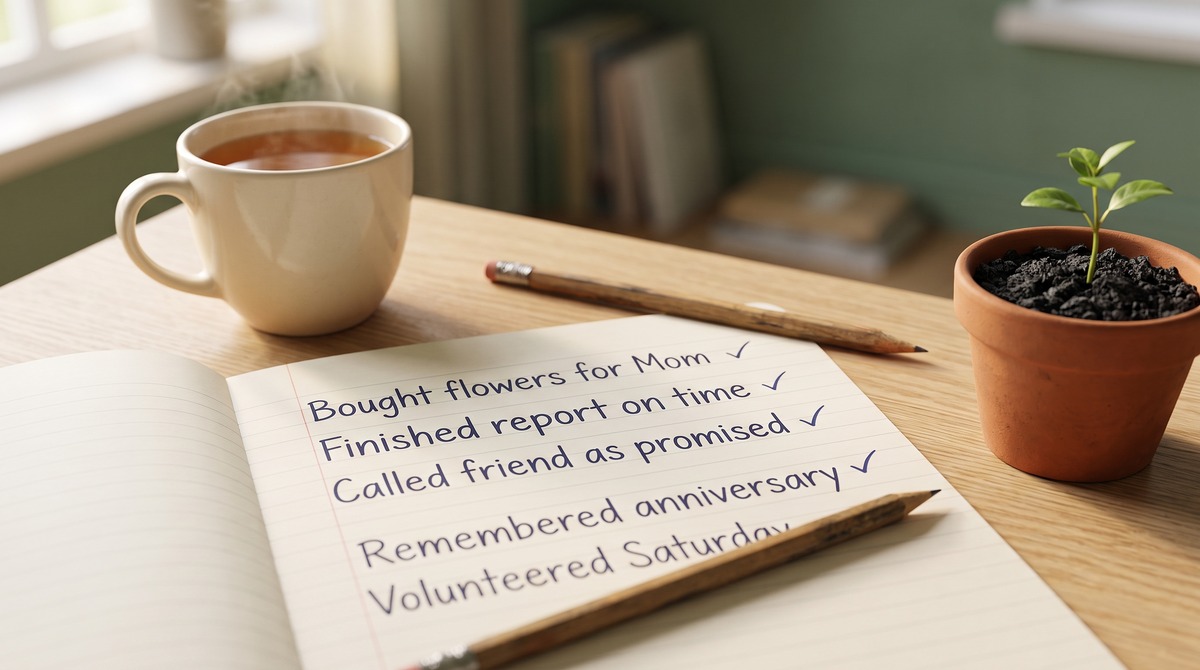
- Keep a self-trust log. Write down every promise you kept and every fast action you took. When imposter syndrome says you never follow through, you hand it the list. Evidence beats the voice, but only if you save the evidence. If pen and paper never sticks, I built a tiny habit app called Dopamine Dealer that makes logging a kept promise feel like a small win instead of a chore.
- Audit who you’re around. Move toward people who talk about ideas and away from people who talk about people. Your confidence is a seed, and gossip is bad soil. Protect it on purpose.
- Put the past down on purpose. When an old mistake replays, name the lesson in one sentence, then set it down. Dwelling doesn’t make you wiser, it makes you paralyzed. Learn it and move forward. For more on the comparison spiral that feeds this, read what to do when you feel behind everyone else.
- Protect the base that holds your mind up. For me that’s pilates and eating right. When I keep those promises, my mental health steadies and everything else spirals up from there. Find your version of the foundation and guard it.
This week’s practice
- Pick one promise small enough that you can’t rationalize skipping it. Keep it daily, all week.
- The next time an idea hits, act on the smallest version within ten minutes. No editing, no waiting.
- Start a self-trust log. One line for every kept promise and fast action. Read it when the doubt gets loud.
Become the person, and the proof shows up
The woo and the work meet right here. You don’t attract opportunity by waiting until you feel worthy of it. You become someone who keeps her word to herself, and the proof shows up because you’re finally around to catch it.
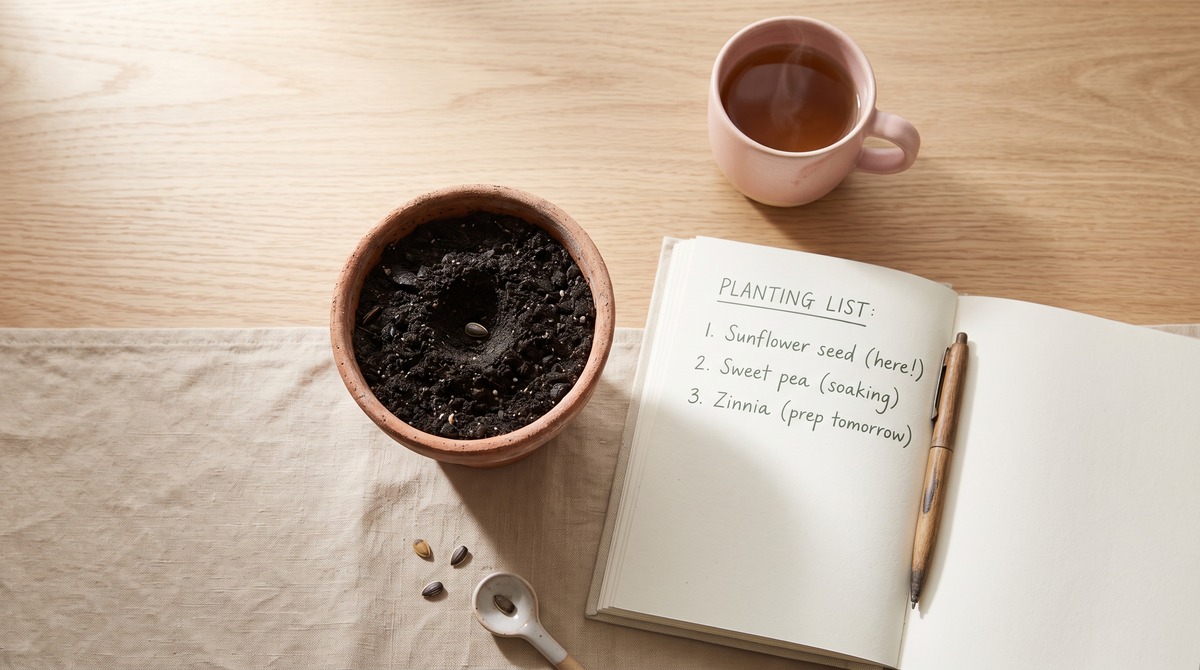
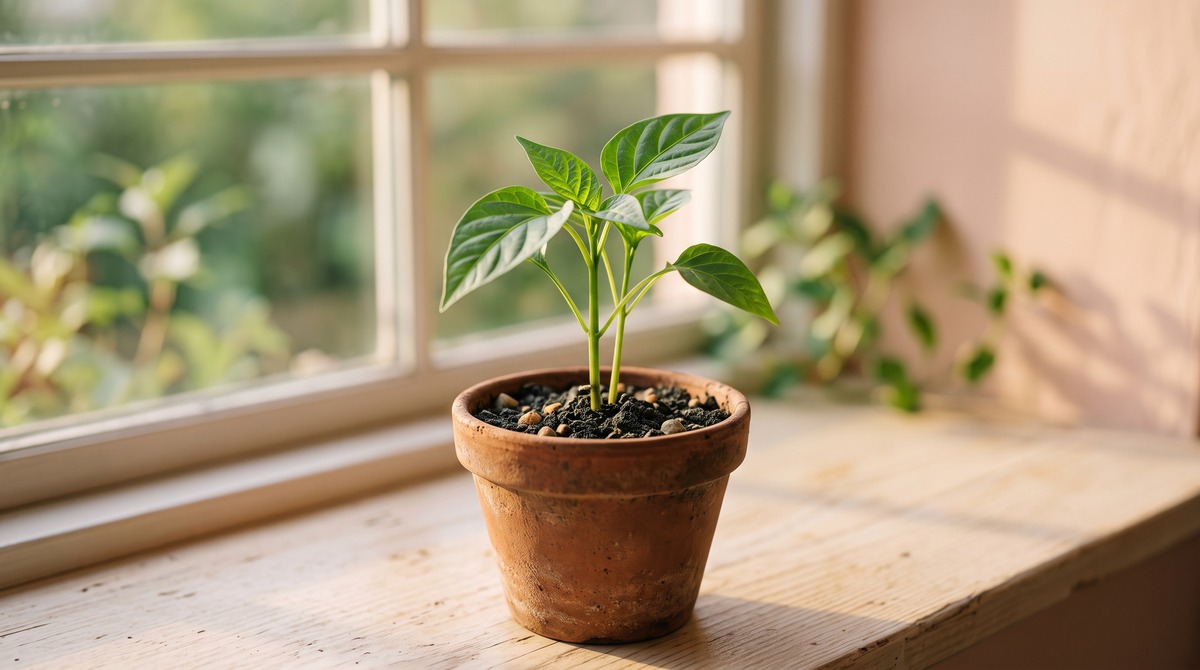
Every kept promise is a seed. You plant it, then you loosen your grip on exactly when the confidence blooms. The action is yours. The timing isn’t. Keep planting and you’ll look up one day and realize you trust yourself, not because you decided to, but because you have months of evidence you can’t deny.
What changes when you trust yourself again
The ideas stop scaring you as much. You still get nervous, but you move anyway, because you have proof you follow through. You stop outsourcing your worth to people who were never qualified to grade it. You spend less time hiding and more time planting. And the videos, or whatever your version of the scary public thing is, get a little less heavy each time, because you already trust the person hitting record.
If you want a structure to act inside, pair this with how to stay consistent when motivation disappears and lean on a simple daily gratitude practice to keep your inputs kind.
| Self-confidence | Self-trust | |
|---|---|---|
| What it’s | A feeling about your ability | A track record of following through |
| Where it comes from | Your mood that day | Kept promises, banked over time |
| When it fails you | The days you feel like a fraud | It holds up on those days |
Frequently asked questions
How do I trust myself when I have imposter syndrome?
Stop trying to feel trustworthy and start acting trustworthy in tiny ways. Imposter syndrome can’t survive a stack of kept promises. Keep one small promise today, log it, and repeat. You’re building a record the doubt can’t argue with.
How long does it take to rebuild self-trust?
Faster than you think for the first flicker, longer than you want for the deep kind. You’ll feel a small shift within a week of keeping daily promises. The steady, in-your-bones version takes months of repetition. It moves at the speed of evidence, so collect evidence daily.
What if I have a real track record of bad decisions?
A track record is the past, and the past is data, not a verdict. Name the lesson from it in one sentence and put it down. You’re not the sum of your worst stretch. You’re whatever you plant next, starting with the next small choice.
Should I build in public if it terrifies me?
You don’t have to start in public. Build self-trust privately first with kept promises and fast action, and the public part gets lighter as your evidence grows. When you do post, treat it like step two on the list. Act inside the ten-minute window, before the “why me” voice wins.
What is the difference between self-confidence and self-trust?
Confidence is a feeling about your ability. Self-trust is a track record of following through. Confidence comes and goes with your mood. Self-trust is built and banked, which is why it holds up on the days you feel like a fraud.
You don’t have to feel ready to begin rebuilding self-trust. You have to keep one small promise, act before you overthink, and let the past be a lesson instead of a sentence. Plant the evidence today, and let yourself meet the confidence later.
A tool I built
Dopamine Dealer
Track your habits and get a hit of dopamine every time you check one off. No willpower required.
Start your streak →I run an affiliate program on the tools I build. Approved affiliates earn 20% on what their referrals pay, for up to a year. US only for now. See the program →