


You open your Apple One bill. You scroll past Music and iCloud, and your eyes land on Apple TV+. You watched one show on it three months ago. You weren’t going to cancel because the family plan bundles everything. But you didn’t know that same Apple subscription hands you a Friday night baseball game every week and every MLS match of the season. Or that your Amex Platinum already covers $300 a year of the streaming you pay for separately. Or that your Chase Sapphire Reserve covers Apple TV and Apple Music outright.
You’re paying for the seeds. You’re just not harvesting them.
This is what the Subscription Perks Database is for. It’s a free reference catalog of every benefit included in 46 of the most common subscriptions, sorted by which ones stay buried in the fine print. Of the 473 perks tracked, 340 are “hidden gems,” benefits you can use this month if you happen to know they exist.
Heads up: some links in this post are affiliate links, which means I may earn a commission if you sign up, at no extra cost to you. I only point to tools I actually use.
Why do subscription perks stay hidden?
The average household carries 12 or more paid subscriptions. The marketing emails sell you on the headline feature. The fine print is where the real value lives. Costco emails you about the hot dog. Costco does not email you about the free roadside assistance bundled with the Citi Costco card, or the included travel agency often beating Expedia.
We pay for these things. We just stop reading after the welcome email.
The list of underused perks is long, but a few patterns repeat:
- Bundled streaming you forgot was included
- Travel benefits buried in credit card statements (rental car insurance, trip protection, free hotel nights)
- Free shipping or replacements you assumed required a phone call
- Member-only pricing on things you’d buy anyway (event tickets, prescription drugs, optical care, tax software)
- Free professional services (estate planning, tax help, ID monitoring)
The Subscription Perks Database surfaces all of these in one place, organized by subscription name. You scroll to what you already pay for, and the list of perks you’re not using lights up.
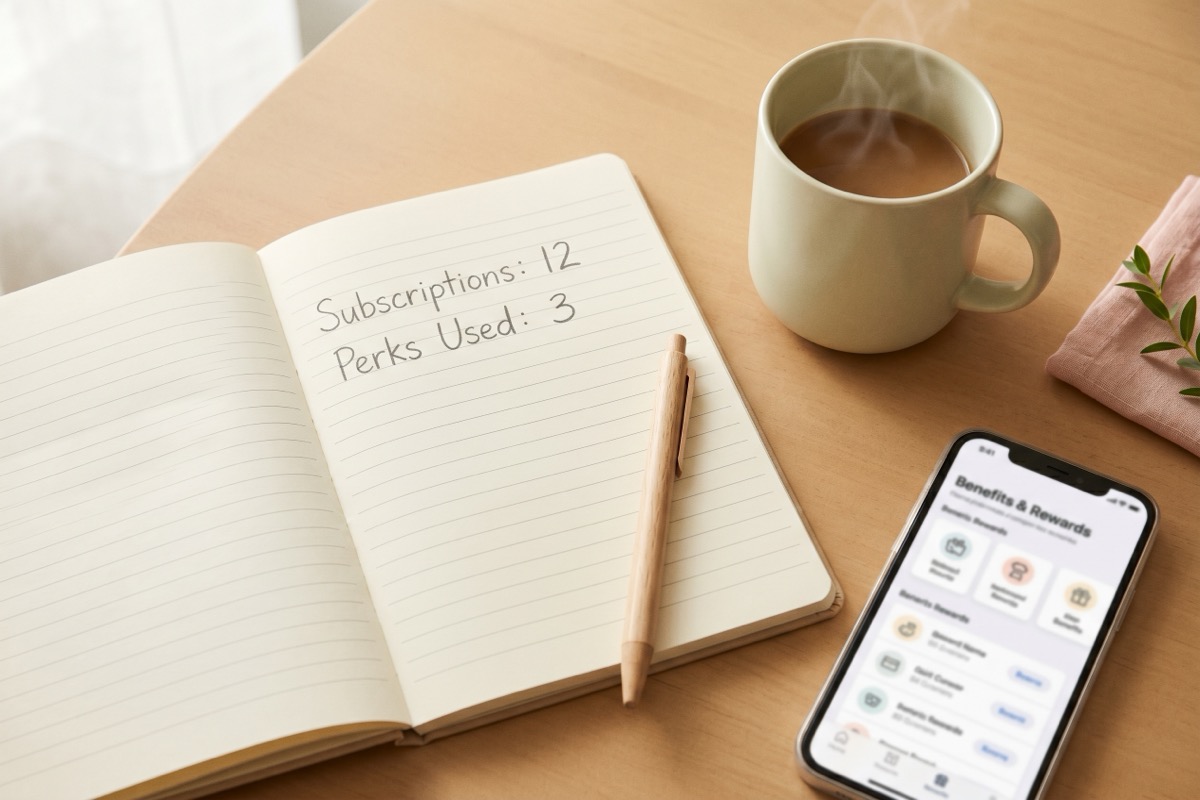
5 hidden subscription perks worth screenshotting
The database has 340 of these. Here are five from different categories to show what’s possible:
| Subscription | Hidden perk | What it’s worth |
|---|---|---|
| Amex Platinum (Personal) | $300/year entertainment credit ($25 a month) covering Disney+, Hulu, ESPN+, Paramount+, YouTube Premium, NYT, WSJ, and standalone Peacock | Stacks against subs you already pay for |
| Amazon Prime | Unlimited full-resolution photo storage and free Grubhub+ membership | ~$120/year in Grubhub alone |
| Robinhood Gold | 3% IRA contribution match and 3.35% APY on cash, a rate Robinhood can change | A maxed 2026 IRA matches $225 instead of $75 |
| Chase Sapphire Reserve | Apple TV and Apple Music both included, once you activate the benefit | $288/year combined |
| Sam’s Club Plus | 2% Sam’s Cash back on qualifying purchases, plus free shipping and early shopping hours | Up to $750 a year in Sam’s Cash |
If even one of these applies to you, you’ve already covered the cost of the next perk you find.
Not all of them are free money. Some credits only count if you enroll first, and monthly credits usually reset instead of rolling over. That is the part I check before I count anything as saved.
Abundance is usually closer than it looks
The blog version of this idea is simple. Luck is rarely far away. It’s hiding in things you already have access to.
Manifestation works best when it’s met halfway. The universe is fine with handing you a $300 credit. You still need to be the one who looks at the page where it’s printed. Gratitude without curiosity is half a practice. Curiosity is the action half.
You can be grateful for a subscription you have AND check what else it does for you. Both are seeds. One feels like inner work. The other is on your phone right now in three taps.
Today’s seed: audit one subscription this week
Open one subscription you pay for. Pick the one you suspect you use the least. Look it up in the Subscription Perks Database. Pick one perk you didn’t know about. Use it once this week.
If the perk is a credit, set a calendar reminder to apply it monthly. If it’s a service, save the contact info. If it’s a benefit you keep forgetting, screenshot the entry and drop it in your photos. If remembering is the part that breaks, I built Dopamine Dealer Habits to make small repeat actions feel good instead of like another chore.
One small action turns a “thing I pay for” into a thing paying you back.
For a more structured pass, the Subscription Audit walks you through every subscription you actually have, helps you categorize them, and tells you which ones to cut and which to mine. If you want the walkthrough first, here is how to audit your subscriptions in 10 minutes.

Frequently asked questions
How do I find hidden perks in my subscriptions?
Start with the welcome email or the benefits page in your account dashboard. Most subscriptions list 5-15 perks on a page I never thought to open. For a faster scan, use the Subscription Perks Database, which has 473 perks cataloged across 46 of the most common subscriptions. Search your subscription name and scroll the list.
Why don’t subscriptions tell me about their hidden perks?
Most subscriptions market the one feature you signed up for and keep the rest in the fine print. Apple TV includes a Friday night baseball game every week and the full MLS season, but no Apple email is going to mention that until you start considering canceling. Companies bury the value to keep you paying for the surface promise.
Do subscription perks pay off if I have to remember to use them?
Yes, when any one perk covers the subscription cost. A $5 Robinhood Gold membership pays for itself the moment a 3% IRA match kicks in. A $20/month Amazon Prime covers itself with one Grubhub+ month. The trick is putting the perks somewhere you’ll see them when the moment comes (calendar reminders, screenshot in your Notes app, or a quick weekly check) beats trying to remember.
Which subscription has the most hidden perks?
Credit cards lead the list, especially premium travel cards. Amex Platinum has 30+ tracked perks. Chase Sapphire Reserve has 25+. Costco and Sam’s Club each have 15-20 benefits past the discount on bulk items. The reason credit cards dominate is they’re competing on perks rather than price, so they keep stacking benefits to justify the annual fee.
What’s the difference between a hidden perk and a regular benefit?
A regular benefit is what the marketing page leads with. A hidden perk is everything else: bundled extras, member-only pricing, included insurance, free services, partner discounts. Apple TV as a streaming service is a regular benefit. The Friday night baseball and the full MLS season included with it are hidden perks because they live three clicks deep in a benefits page, not on the marketing page.
How often should I audit my subscriptions?
Every 90 days for the perks check, every 6 months for the cancel-or-keep decision. The 90-day pass catches new perks (subscriptions add them quarterly) and seasonal credits you might miss. The 6-month pass asks whether you’re using the subscription at all. The database refreshes monthly, so a check right after a refresh often surfaces something new.
What does a subscription audit actually save you?
You realize you’ve been paying for two services already included in something else. You cancel one. You set a reminder to use a $300 credit you forgot existed. You learn your Costco card includes optical coverage worth $200 a year. Three small actions in 15 minutes and you’re $400+ ahead this year.
The other half is what you do with the money once you find it. A friend of mine built Mullet, a savings app that turns the boring part into something you want to open, and a freed-up $300 is a good first seed for it.
Luck favors the ones who look. The seeds you’ve already planted are waiting in your bank statement.
A tool I built
Subscription Graveyard
Bury the subscriptions you’ve cancelled, give each one a tombstone, and watch what you’re saving pile up.
Bury your first one →I run an affiliate program on the tools I build. Approved affiliates earn 20% on what their referrals pay, for up to a year. US only for now. See the program →
Related reading
- How to Audit Your Subscriptions in 10 Minutes (Keep, Audit, Cancel)
- The $200 Perk My Friend Almost Missed (Free Tool to Find Yours)
- What Happens When You Act Lucky
The short version: 46 common subscriptions carry 473 perks, 340 of them go unused, and one 15 minute check is usually enough to find one you can use this month.
Today’s action: open one subscription, find one perk in the database, use it this week. The whole practice fits in one cup of coffee.