


To build a daily gratitude practice that sticks, make it small enough that skipping feels like more effort than doing it. Three things, five minutes, same time each day. Write them even when you don’t feel them, because the practice is attention training, not a mood booster. You are teaching your brain to look for good things. The feeling catches up later.
I have not always been good at gratitude. I have done the journal thing half-heartedly, written the same three things on autopilot, and closed the notebook feeling exactly the same as when I opened it. I have also been in dark enough places that finding anything to be grateful for felt almost insulting, like someone was asking me to perform okayness I didn’t have.
So if that’s where you are, I’m not going to tell you this is easy. I’m going to tell you to do it anyway, even badly, even hollowly, even when the only thing you can write is “I am breathing.” That counts. It really does.
And if you stick with it long enough, something shifts. Not dramatically, not all at once, but in this quiet way where one day you realize you are noticing things you would have walked right past before.
Why Do Most Gratitude Practices Fall Apart?
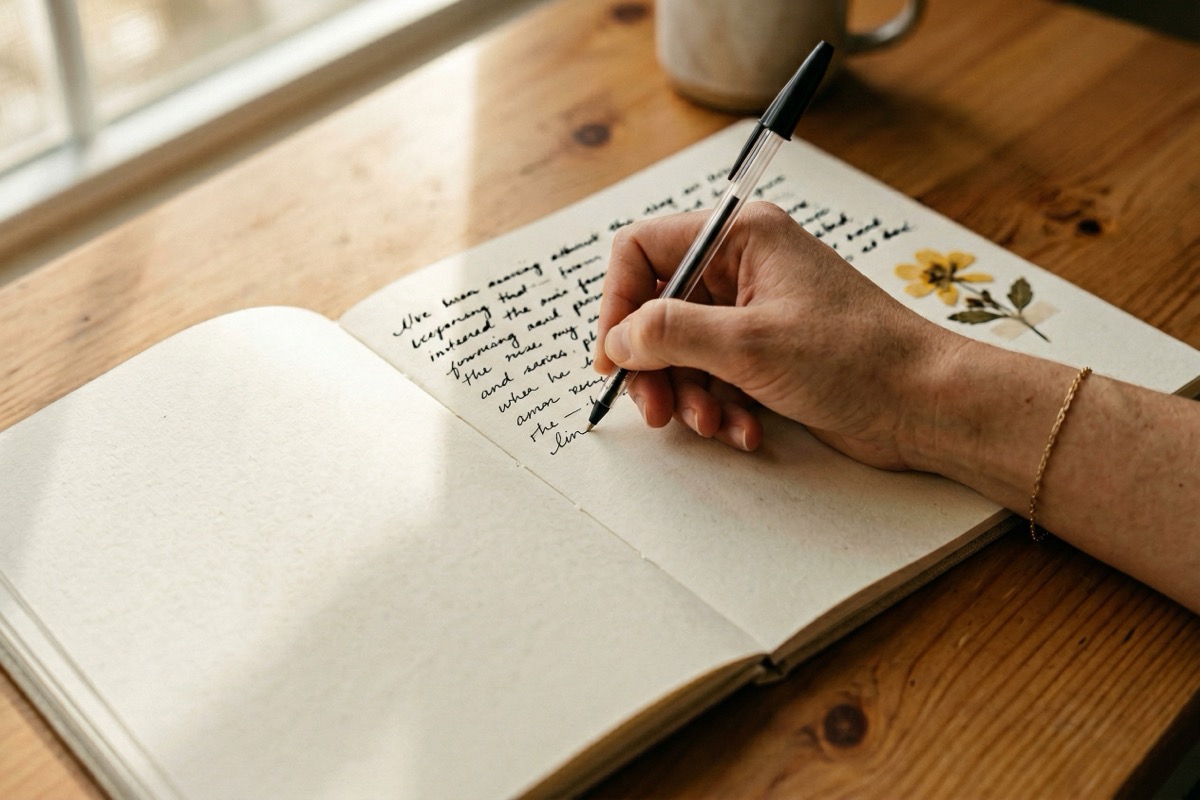
I quit my gratitude practice more than once, and it wasn’t because gratitude doesn’t work. It was because I started it in a way that was never going to last. The pen-and-paper version died on day two, and what finally kept a habit alive for me was turning it into a game.
They downloaded a fancy journal. They committed to writing ten things every morning before coffee. They did it for four days and then missed one and then the journal sat on the nightstand getting dusty.
Or, and this one I know intimately, they started it during a hard season when nothing felt genuine. Every entry felt like a lie or a task, something to check off rather than something to feel. And when a practice feels like a chore, our brains will find every reason to skip it.
That hollow feeling doesn’t mean the practice isn’t working. When I first started trying to write things I was grateful for, I was in a dark place and my heart was not in it at all. But my brain loves a task. I was not going to leave something unchecked on a list. So I found the five things, even when they were small and obvious and felt almost embarrassing to write down.
Even then, something was happening. My brain was being trained to look for evidence of good things. The looking matters even when the feeling isn’t there yet.
What Is a Gratitude Practice Actually For?
A gratitude practice is attention training. A lot of people expect it to work like a mood booster, and that misunderstanding is what makes it feel pointless early on.
When you sit down every morning and deliberately look for things that are going well, you are training your brain to notice them throughout the rest of the day too. You are building a new default filter. Instead of scanning for threats and problems, which is what our brains do naturally because that’s how we survived as a species, you are practicing scanning for abundance.
And the thing about attention is that you find more of whatever you’re looking for. If you are oriented toward lack, you will find evidence of lack everywhere. If you practice orienting toward gratitude, you start noticing the things that were always there but invisible to you before.
That is not spiritual bypassing. That is just how the brain works.
The “I Get To” Reframe
I picked this one up somewhere along the way and I couldn’t tell you where, but it stuck with me because it works.
Replace “I have to” with “I get to.”
There’s a similar one I love too: focus on the opportunity, not the obligation. I didn’t come up with either of these, but I pass them along because they genuinely do something when you use them.
I have to go to my aunt’s house becomes I have the opportunity to spend time with family today. I have to make dinner becomes I get to make dinner, which means I have food, and a kitchen, and people to feed. The facts are the same. The energy is completely different.
| What you tell yourself | The reframe |
|---|---|
| I have to go to my aunt’s house | I get to spend time with family today |
| I have to make dinner | I get to make dinner, which means I have food, and a kitchen, and people to feed |
| I have to answer these emails | I get to answer these emails, because people want something from me |
I forget to do this constantly. It doesn’t just run automatically for me. But on the days I remember, the whole day feels lighter. I’m moving through the same obligations with a different orientation, and that orientation changes what I notice and how I show up.
That’s the gratitude practice in miniature. A small reframe, repeated often enough, that rewires how you see your own life.
How Does a Gratitude Practice Change Over Time?
It gets easier, and then it gets automatic. I have been doing some version of a gratitude practice for a few years now, and the difference is that I no longer have to go looking. My brain finds the things on its own.
In the beginning it was effortful. Deliberate. I had to sit down and make myself do it and sometimes the entries were almost comically basic. Coffee. Sunshine. The fact that my body works.
Now it’s not hard to find things to be grateful for. I see them easily. Even on rough days I can pull it back. Part of it is perspective, seeing what’s happening in the world and knowing how much worse things could be. But it’s also just that my brain has been trained over time to recognize blessings as they happen, not just when I’m sitting with a journal prompt.
It recognizes them throughout the day, without being asked.
The real payoff is that gratitude becomes your ambient frequency instead of something you have to chase.
How Do You Start a Daily Gratitude Practice?
Keep it embarrassingly simple. Three things, five minutes, once a day. That’s the whole practice.
Five minutes in the morning. Three things. They can be tiny. They can be the same things two days in a row. They just have to be real, meaning you actually mean them even a little bit.
If you’re in a dark place and nothing feels genuine, start with the physical. I am breathing. I have a roof. The coffee is hot. These are not small things, even when they feel small. Let them be enough.
If journaling feels like too much, say it out loud in the shower. Text it to yourself. Voice memo it on your drive. The format is not the point. The looking is the point.
If a journal is the part that keeps falling off, I built a habit app called Dopamine Dealer Habits that makes the daily check-in feel like something you want to open, not another chore on the list.
And if a blank page is what stops you, the Brain Shift Journal gives you a different prompt each day instead of the same three lines.
And when you miss a day, you just start again the next one. There is no streak to protect here. There is just the practice, and the practice is always available to you.

Today’s Action
Try the “I get to” swap just once today. Find one thing on your list that you’ve been framing as an obligation and reframe it as a privilege. Then tonight before you sleep, think of three things from today that were good. They don’t have to be big. Just real. That’s it. That’s the whole practice. Start there.
Frequently Asked Questions
What if I can’t think of anything to be grateful for?
Start with your body. You are breathing. Your heart is beating. That is genuinely enough to begin with. From there, go to the physical world around you. A window. A blanket. Running water. The practice works even when the entries feel obvious or small. The point is the looking, not the size of what you find.
How long until I notice a difference?
It varies a lot depending on where you’re starting from. Some people feel a shift within a week or two. For others it’s more gradual, a quiet change that you only notice when you look back and realize you’ve been seeing things differently for a while. Either way, consistent is more important than perfect.
Does it have to be a journal or can I do it another way?
Any way that you will actually do it is the right way. Some people speak it out loud. Some people text it to themselves. Some people keep a note on their phone. The format matters far less than the consistency. If the journal feels like a chore, try something else.
I started a gratitude practice before and it didn’t stick. Why would this time be different?
It might not be. And that’s okay. That’s why it’s called a practice. You have to practice it over and over again. What I’d suggest is making it smaller than whatever you tried before. If you committed to ten things, try three. If you committed to every morning, try a few times a week. The bar should be so low that skipping it feels like more effort than doing it.
You don’t have to feel grateful to practice gratitude. You just have to look.
And the more you look, the more you find. And the more you find, the more there actually is.
Start small. Start today. Let it be imperfect.
A tool I built
Dopamine Dealer
Track your habits and get a hit of dopamine every time you check one off. No willpower required.
Start your streak →I run an affiliate program on the tools I build. Approved affiliates earn 20% on what their referrals pay, for up to a year. US only for now. See the program →