

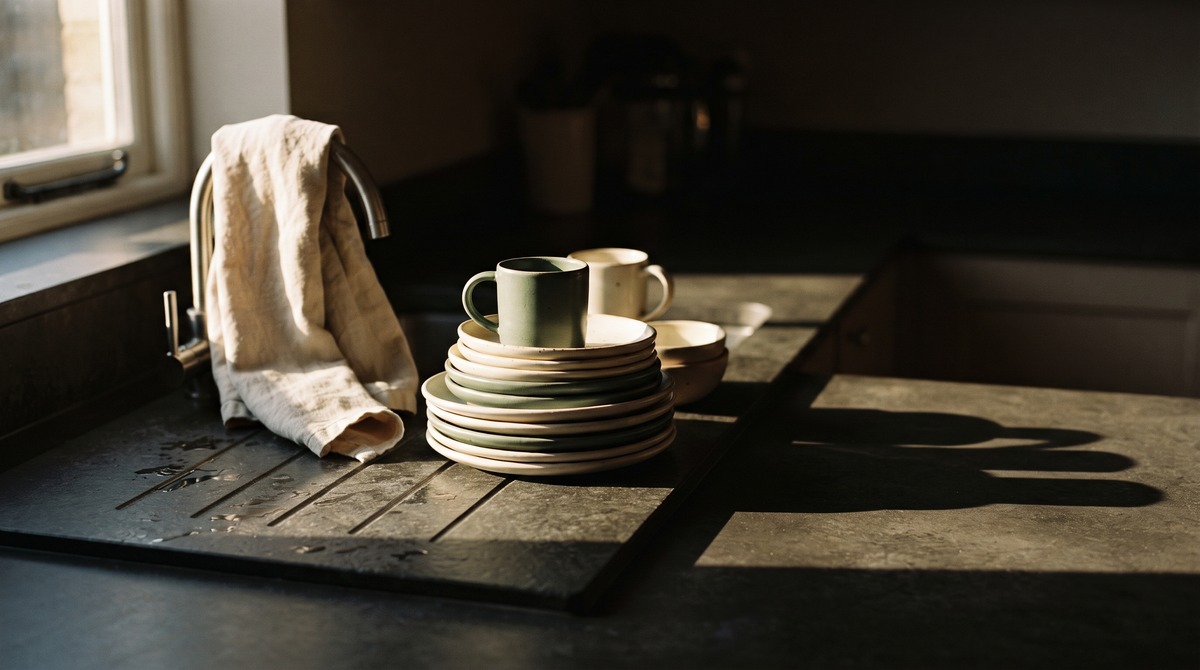
I think everything will take longer than it does, and it happens to me every day. I look at the dishes and figure it’s a 45 minute job, and then I do them in 8. What that number in my head tracks is how much I don’t want to do the thing, so the stuff I dread gets a big number and the stuff I want gets a small one, and neither number has much to do with the clock.
Why do I think everything will take so long?
Because the guess is coming from how I feel about the job.
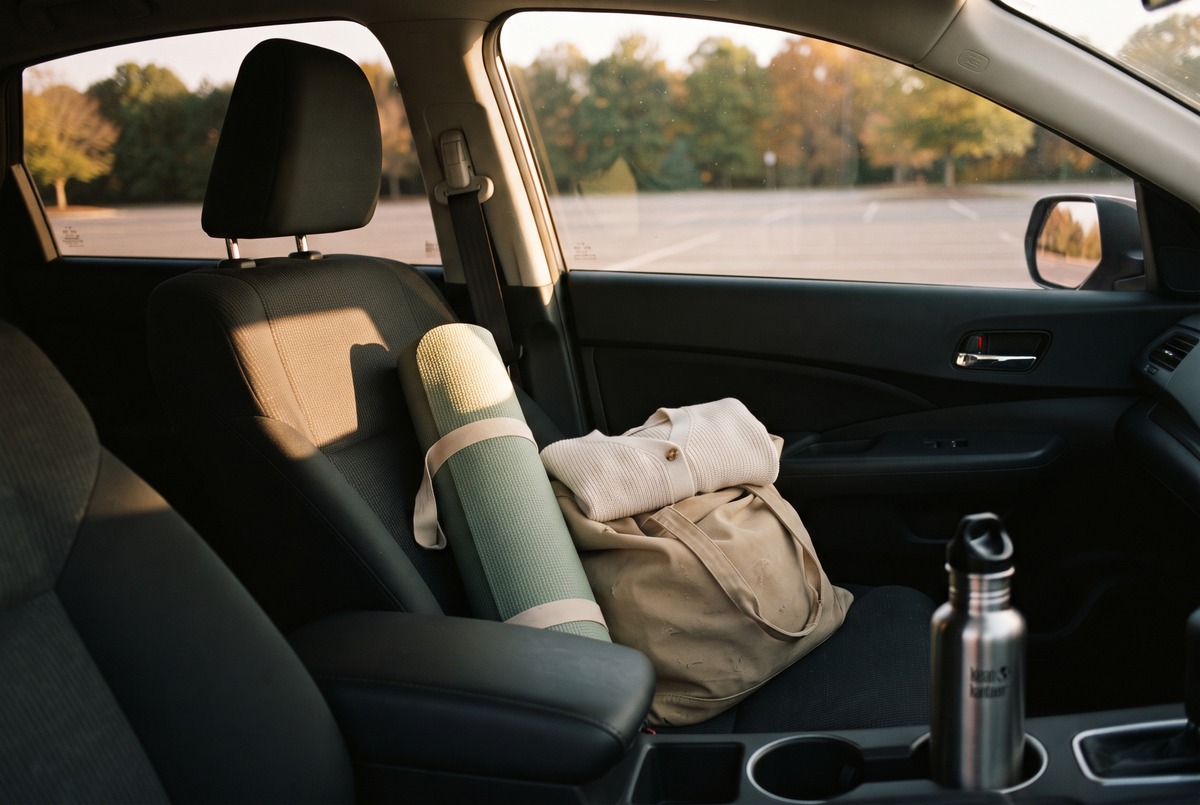
I have two of these that happen almost every day. The dishes are the first one. I’ll walk past the sink, decide it’s going to eat 45 minutes of my evening, and put it off. When I finally do them, it takes 8 minutes. The second one is Pilates. I’ll think the drive is going to take half an hour, and it takes about 12 minutes.
Neither of those is a hard sum. I have done both of them hundreds of times. I still get the number wrong in the same direction every single time, and I don’t seem to learn a thing from it.

Does it ever go the other way?
Yes, and the other direction is how I worked out what the number is doing.
I’ll sit down and think I’m going to knock out a blog post real quick, and real quick turns into two hours. So I don’t always guess high. I guess high on the things I’m dreading and low on the things I want to do. The number is tracking my mood about the task.
Once you see it that way, the dishes make sense. I don’t want to do the dishes, so my brain hands me a big scary number, and the big scary number is a good reason to not start. It’s a very tidy little system for getting out of things.
Why doesn’t knowing about it fix it?
I do catch it, but only afterward, and only for a second. I’ll finish the dishes and think huh, that didn’t take long at all, and then the thought is gone and the next time I walk past the sink I’m right back to 45 minutes.
I know the real number. I could tell you the real number right now. Something about it just doesn’t stick, and I’ve stopped treating that as a personal failing, because it clearly isn’t a knowledge problem. I have the knowledge. It’s the wanting that overrides it.
I’ve gotten so annoyed with myself about this that I’ve started leaving notes in Asana on the tasks I know I avoid. The note says, in capital letters, THIS IS EASY, JUST DO IT RIGHT AWAY. I am yelling at myself in a project management app, which tells you how well the polite version was working.
Is overestimating always a bad thing?
No, and I want to be real with you here, because there’s a version of this that I actually like.
I want to be at Pilates early. If I get there and I don’t have ten minutes to sit in the parking lot before class, I’m stressed for the whole session. So the padded drive time isn’t hurting me at all, it’s buying me something my nervous system kind of needs. The overestimate is doing a real job.
That’s worth sorting out before you go fixing anything. Some of the padding is buffer you’ve built on purpose and you should keep it. The padding that’s a problem is the kind that stops you starting, like a sink full of dishes that costs you a whole evening of low-level dread over an 8 minute job.
What actually helps?
The only thing that’s helped me is timing one, and then writing the real number down somewhere I’ll see it again.
The timing part is easy and you’ve probably done it by accident. Pick the chore you’ve been avoiding, start a timer on your phone, do the thing, and look at the number when you’re finished. Almost every time, the number is embarrassing in a good way.
If the thing you’re avoiding is a pile of paperwork, an admin night does the same job with a timer and four ten-minute stations.
The writing it down part is the part I kept skipping, and it’s the part that matters, because I already knew the dishes were quick and that knowledge never showed up when I needed it. A real number, written on the task itself, is there at the exact moment my brain is trying to sell me the 45 minutes. It’s a small trick and it works better than arguing with myself.
The timer below does both steps in one place. Type the number in your head, start it, stop it when you’re done, and it keeps the real number where you’ll see it next time. Nothing you type leaves your browser.
If your problem is that you know the step and still can’t get moving, that’s a different thing and I wrote about it in when you know the next step and still can’t start. And if the task genuinely is big and you’re running on empty, shrinking the seed is the better move.
Today’s action
Pick one chore you’ve been putting off. Not a project, a chore.
- Start a timer on your phone before you begin, and stop it when you’re done.
- Write the real number where the task lives. On the to-do, on a sticky note on the cupboard, in the app, wherever you’ll see it next time.
- Do the same for the next thing you avoid. Two or three real numbers is enough to start noticing the pattern.
- Leave the padding you like. If the extra ten minutes in the car is what keeps you calm, that one isn’t broken.
Frequently asked questions
Why do I think tasks will take longer than they do?
Usually because the guess is measuring how much you don’t want to do the task rather than how long it takes. A job you’re dreading gets an inflated number, and that number then works as a reason to avoid it. The tasks you’re looking forward to get the opposite treatment and often run long.
Why do I still get it wrong when I’ve done the task a hundred times?
Because it isn’t a knowledge problem. You can know the dishes take 8 minutes and still feel like they’ll take 45, because the feeling shows up first and the fact never gets called on. Writing the real number where you’ll see it puts the fact back in the room at the moment you need it.
Is this the same as time blindness?
It’s related. Time blindness usually gets described as losing track of time or underestimating how long things take, and this is the flip side of the same problem, which is a poor sense of how long anything takes in either direction. Plenty of people have both, and I do.
How do I stop putting off small tasks?
Time one of them and write the number down. Small tasks get avoided because they feel big, so the fastest way through it is proof that they aren’t, in your own handwriting, on the task itself rather than in your head.
Should I try to stop overestimating everything?
Not all of it. Some padding is deliberate and useful, like leaving early so you arrive calm, and that kind is worth protecting. The padding worth fixing is the kind that stops you starting something you’d have finished in ten minutes.
What if timing the task makes me feel worse?
That happens, and it usually shows up as guilt about all the time you spent dreading it. Try to treat the number as useful information instead of evidence against yourself, because the point of it is to make the next one easier, not to run a trial about the last one.
A tool I built
Emergency Fund Aquarium
Log what you save at your own bank and watch your tank fill with creatures. Your money never moves through the app.
Start your tank →I run an affiliate program on the tools I build. Approved affiliates earn 20% on what their referrals pay, for up to a year. US only for now. See the program →
Related reading
- When You Know the Next Step and Still Can’t Start
- How to Be Consistent When You’re Tired (Shrink the Seed)
- Why I Start Everything and Finish Nothing
So the next time something feels like it’s going to eat your whole afternoon, put a timer on it and find out. You’ll probably get a number that’s a lot smaller than the one in your head, and if you write that number down somewhere you’ll see it again, it might be there waiting the next time you walk past the sink.